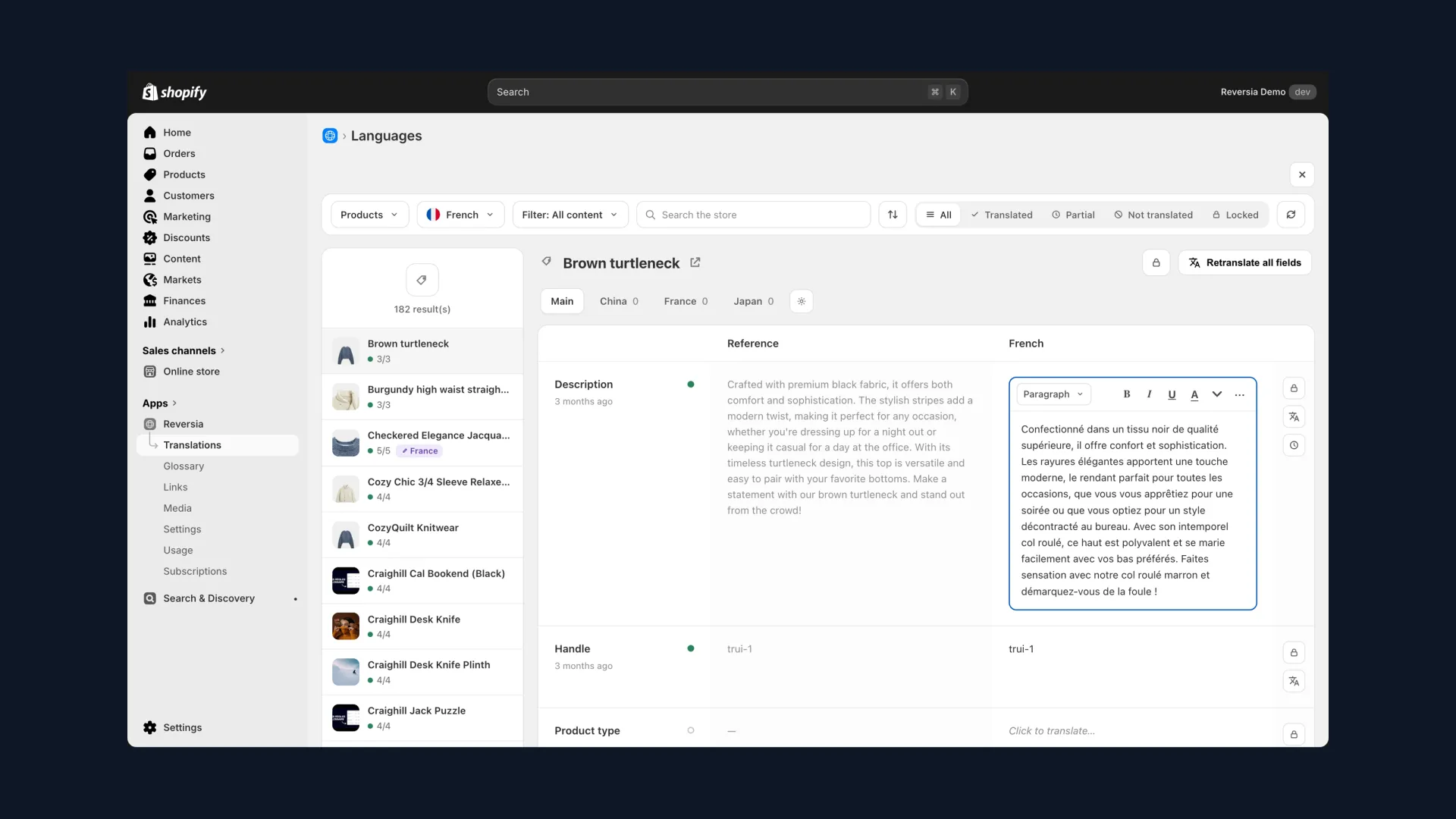
You've translated your store, but international sales aren't taking off? The problem often lies in what gets lost between languages: cultural references, units, tone, visuals.
That's exactly what content localization fixes. In this guide, we explain what it covers, when it's worth the investment, and how to build your strategy in 7 steps.
What is content localization?
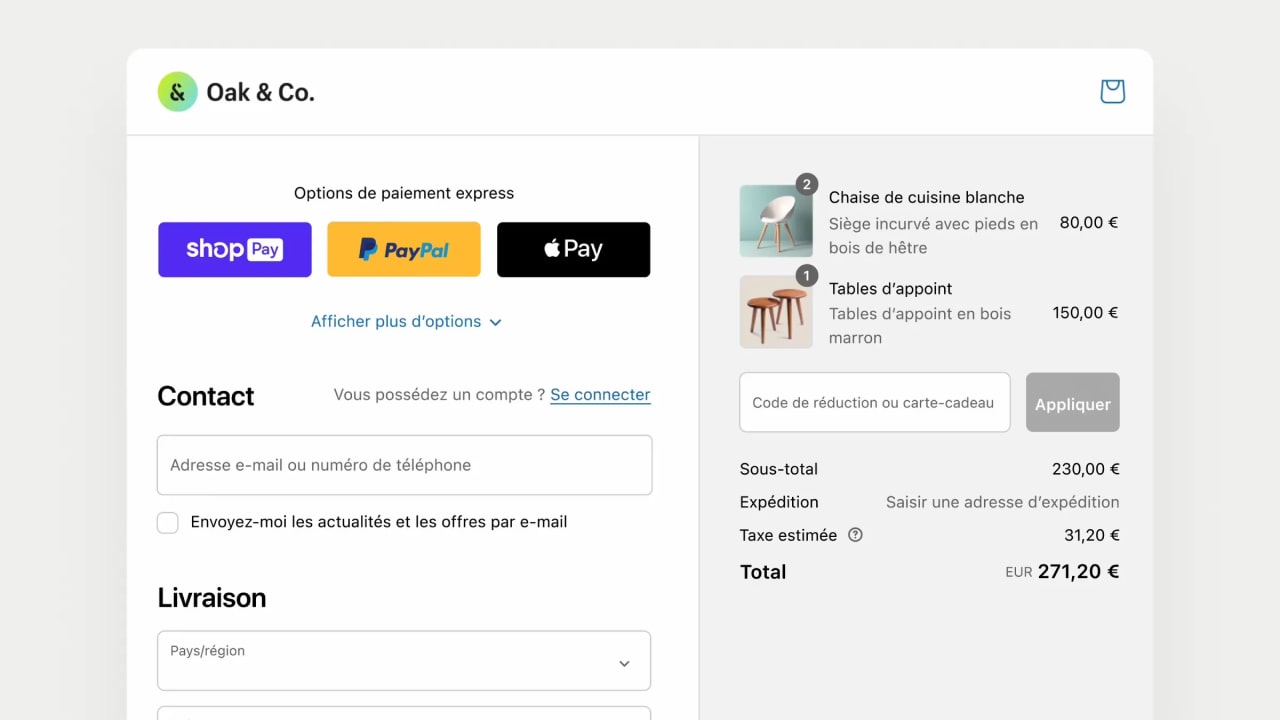
Content localization means adapting all of your content to a given market: text, images, videos, emails, right down to the buttons in your checkout. Translation is only one part of it.
Localizing also means converting currencies and units, adjusting examples and cultural references, and reworking your messaging to match local expectations.
| Criteria | Translation | Localization |
|---|---|---|
| Goal | Convey the meaning of a text in another language | Adapt all content to the local context |
| Scope | Text only | Text, visuals, currencies, units, tone, examples |
| Result | Understandable content | Content that feels native, as if made for the market |
In ecommerce, four content families come first:
- Marketing content - product pages, email campaigns, social media
- Legal content - terms of sale, privacy policy, mandatory notices
- Technical content - user guides, FAQs, help center
- Interface - menus, action buttons, checkout and transactional emails
Why localize? What the numbers say
CSA Research's "Can't Read, Won't Buy" study, conducted with 8,709 consumers across 29 countries, shows the scale of the stakes: 76% of online shoppers prefer to buy products presented in their native language.
Even more striking: 40% never order from a website in another language. Without localization, part of your market is simply closed to you.

Beyond conversion, localized content drives three lasting levers:
- International SEO - your pages match the queries actually typed in each market
- Trust and loyalty - a customer who feels understood comes back
- Compliance - legal notices and policies adapted to local regulations
Should you localize your content? Questions to ask
Localization takes time and budget, and costs climb with every market you add. Before investing, weigh this project against the other growth options available to you.
To assess a market's potential, rely on concrete criteria:
- Do customers in this market expect to interact in their own language?
- What share of the population actually masters English?
- Do your competitors and the local market leaders localize their content?
- How are your pages already performing there: bounce rate, conversion, session length?
Expectations vary enormously from one country to another: Nordic markets tolerate an English-language site well, while Japan or France expect deeply localized content.
If your goal is profitability, put a number on the cost of localization against the expected revenue from the market. A small, English-tolerant market can wait; a large, demanding one deserves the effort.
Building your content localization strategy in 7 steps
Once your target markets are validated, here's the roadmap we recommend:
- Prioritize your markets
- Set market-specific goals
- Choose which content to localize
- Translate and adapt
- Set up your delivery infrastructure
- Formalize a glossary and a style guide
- Launch, measure, iterate
1. Prioritize your markets
There's no universal order, but three approaches have proven themselves:
- Snowball - start with the market offering the best potential revenue-to-effort ratio, then reinvest the gains into the next one
- Test market - localize one element (CTAs, best-seller product pages) in a country where you already sell, measure the impact, then roll out to similar markets
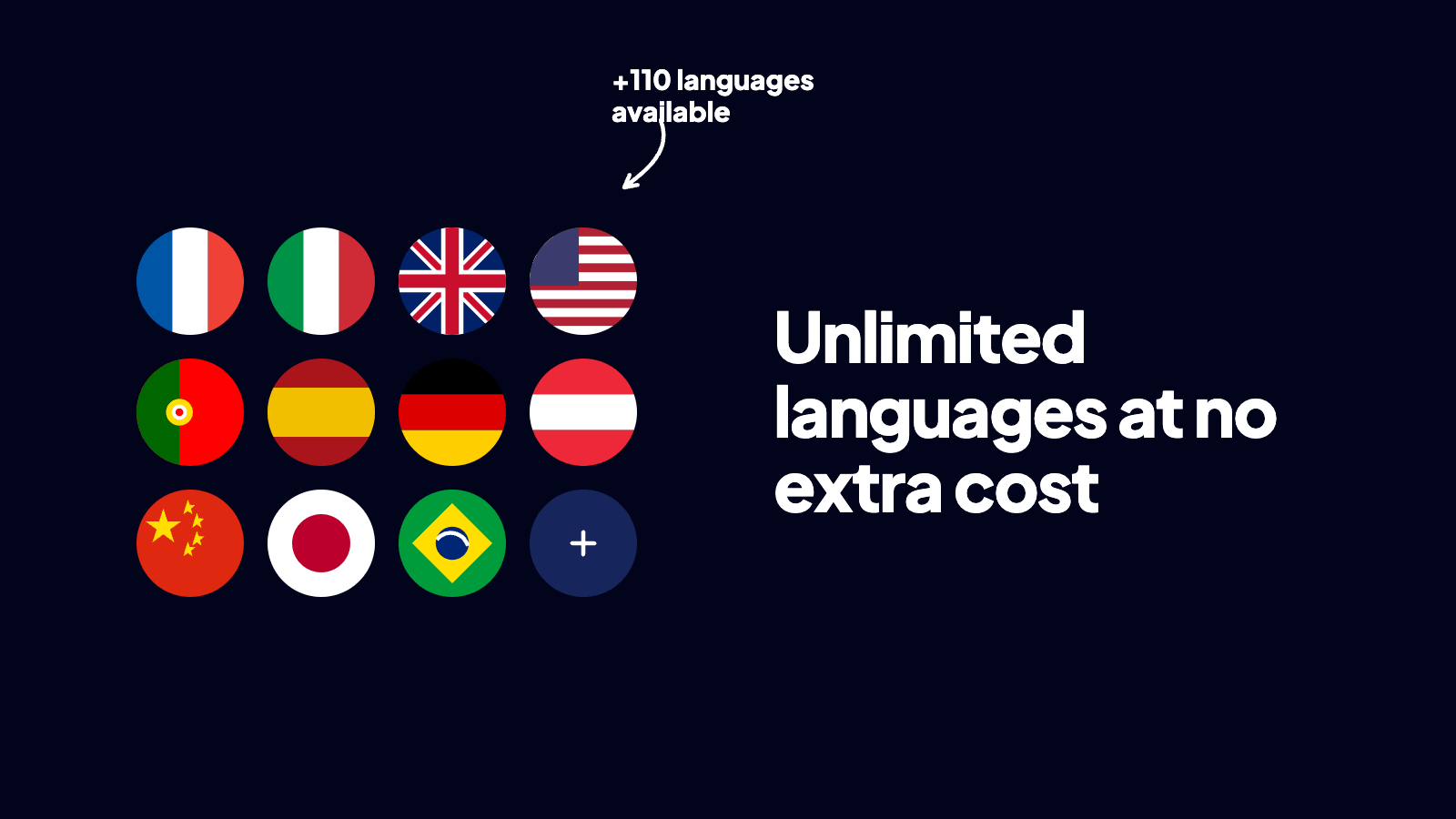
- By language rather than by country - a single Spanish-language site can serve Spain and much of Latin America at launch
2. Set market-specific goals
Define KPIs specific to each market: reducing cart abandonment in Germany, building brand awareness in Mexico... These goals will guide your content choices and budget trade-offs.
3. Choose which content to localize
Not all formats are equal: text localizes easily, images often require new visuals, and video or audio content calls for subtitles, voice-overs, or even full re-recording.
| Format | Difficulty | What to plan for |
|---|---|---|
| Text | Low | Translation + adapting tone and examples |
| Images | Medium | New visuals, embedded text to redo |
| Video / audio | High | Subtitles, voice-over, sometimes full re-recording |

Also study local discovery channels: the social platforms and formats that perform vary widely from country to country. Analyze the pages ranking on Google in your target market and align your formats with what works.
4. Translate and adapt
Three possible approaches, often combined:
- Do it yourself with AI - a machine translation as a first draft, then an editorial review; the effort now goes into adaptation far more than raw translation
- Hire a local expert - a native speaker who knows the market, your target demographic and your brand voice
- Use a specialized solution - an app that industrializes translation, glossary and multilingual SEO
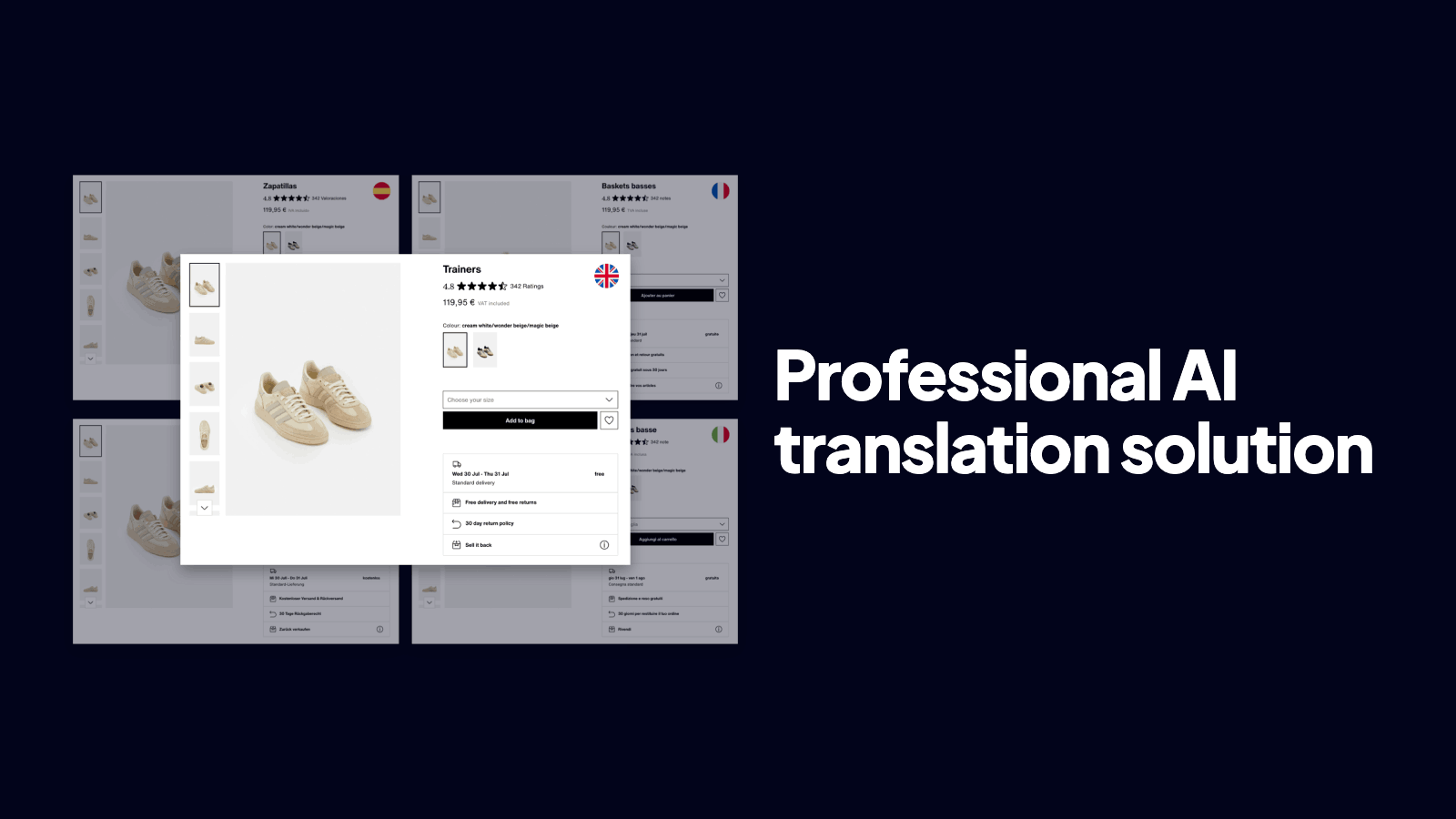
That's exactly Reversia's sweet spot: translation powered by Anthropic's Claude AI, brand prompts, a smart glossary and automated multilingual SEO, for near-native quality without a manual pipeline.
Discover the Reversia app for Shopify
5. Set up your delivery infrastructure
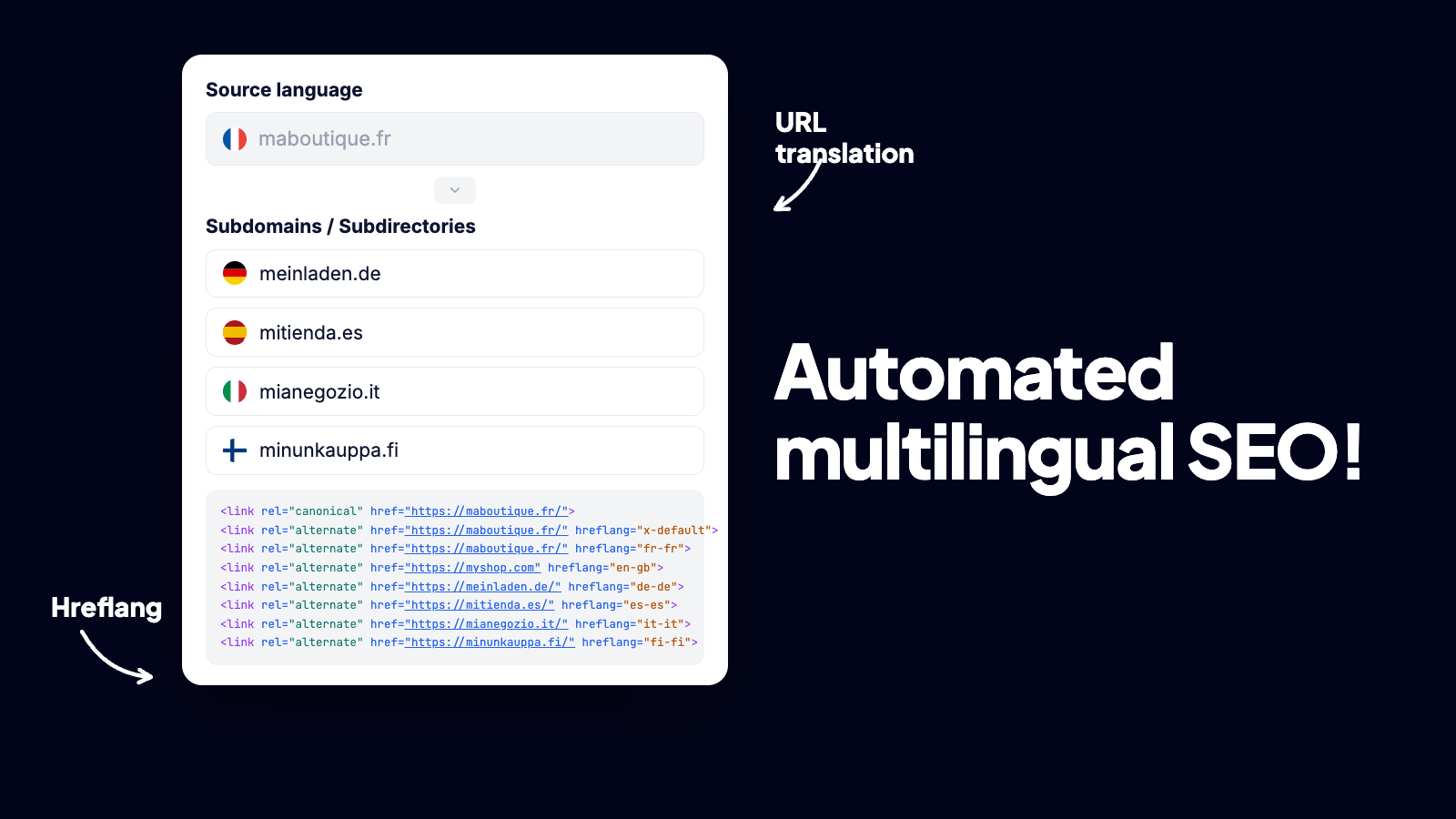
Localizing is pointless if your customers don't see the right version. On Shopify, that's the job of Shopify Markets: each market gets its own language, currency and adapted content.
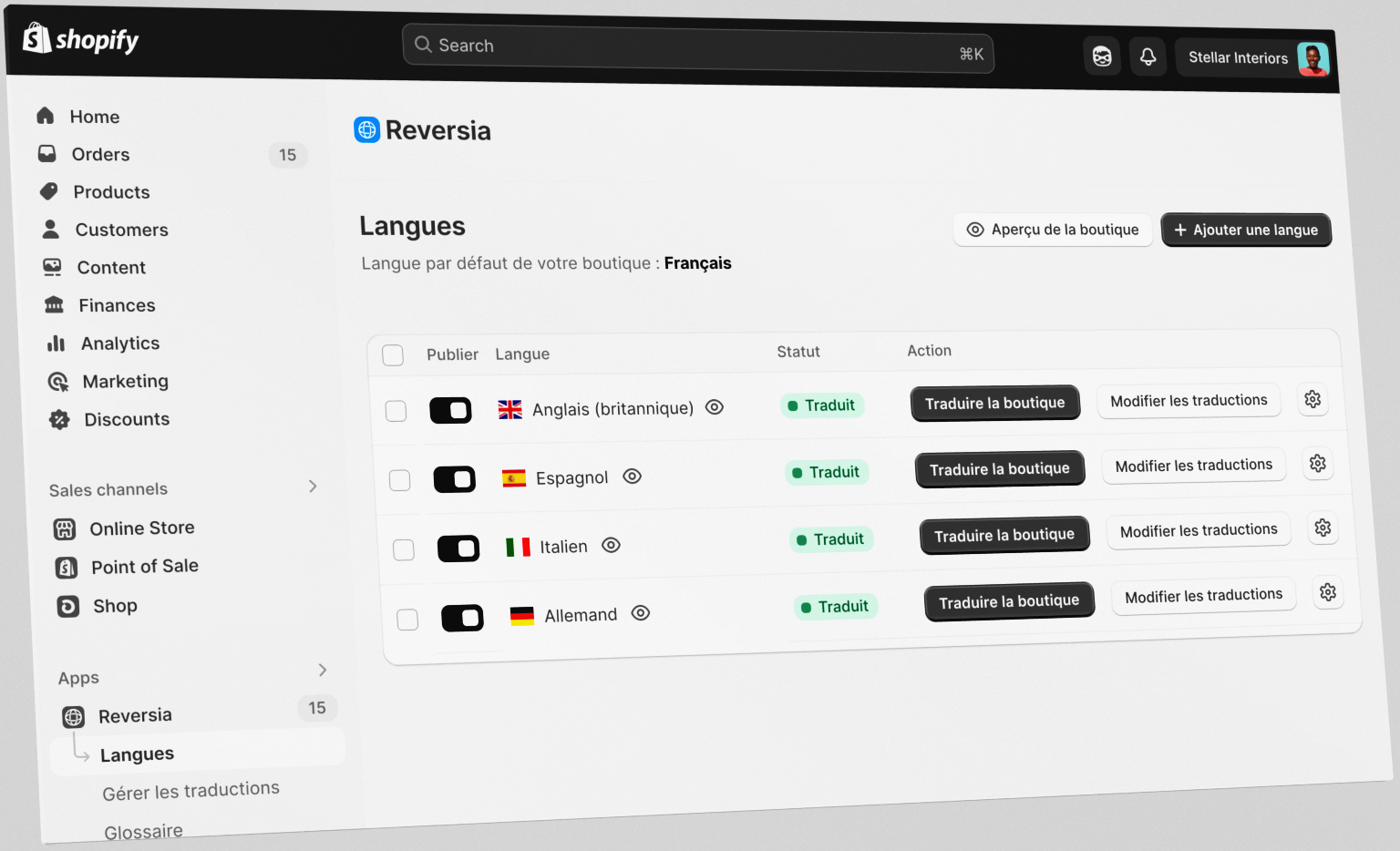
Reversia plugs natively into this mechanism: your translations are stored directly in Shopify, served market by market, and you remain their owner.
6. Formalize a glossary and a style guide
From your very first localizations, write your choices down. A glossary locks in terminology per market - two German words can describe the same product with very different connotations. A style guide frames brand voice, tone and messaging.
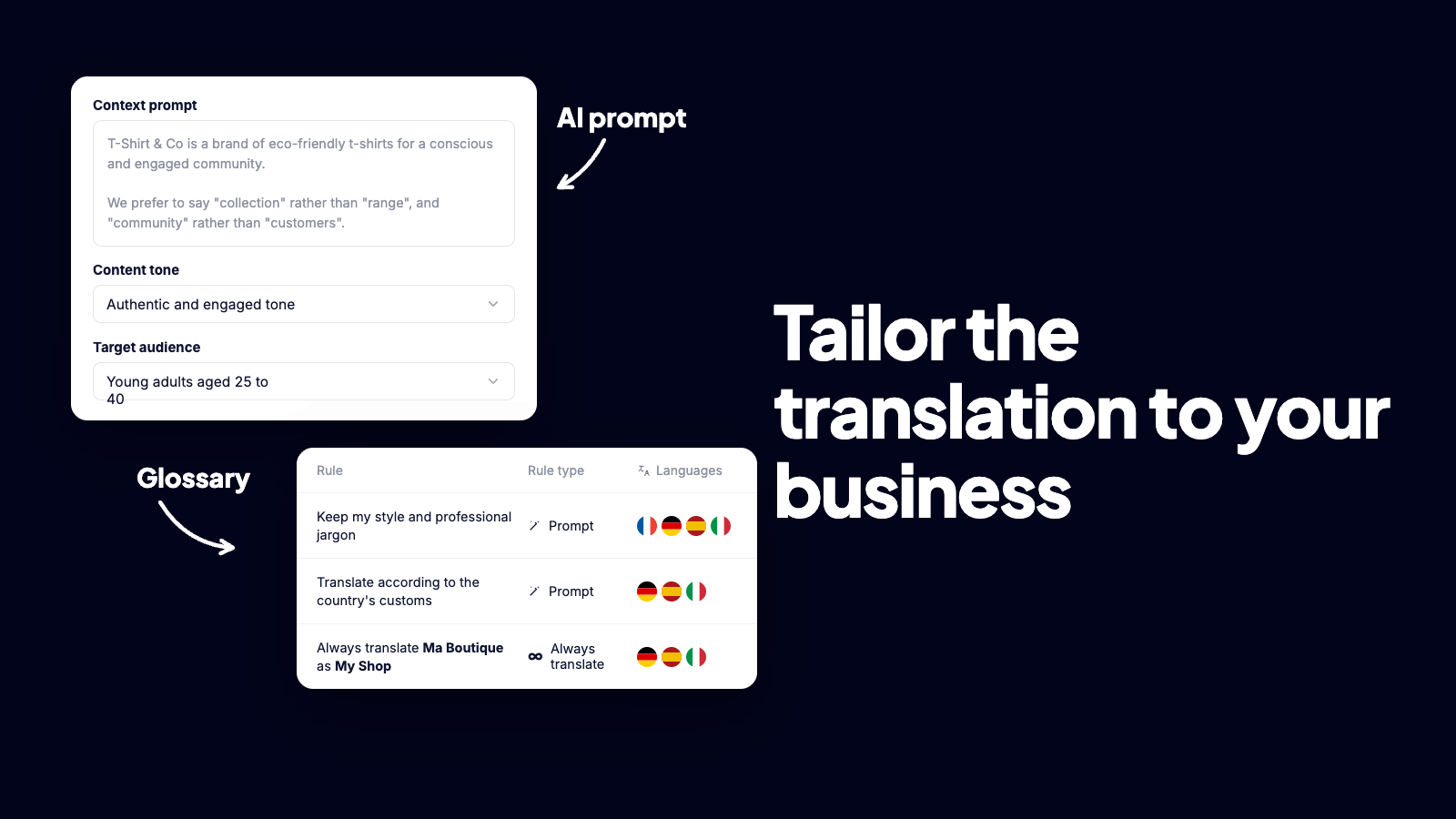
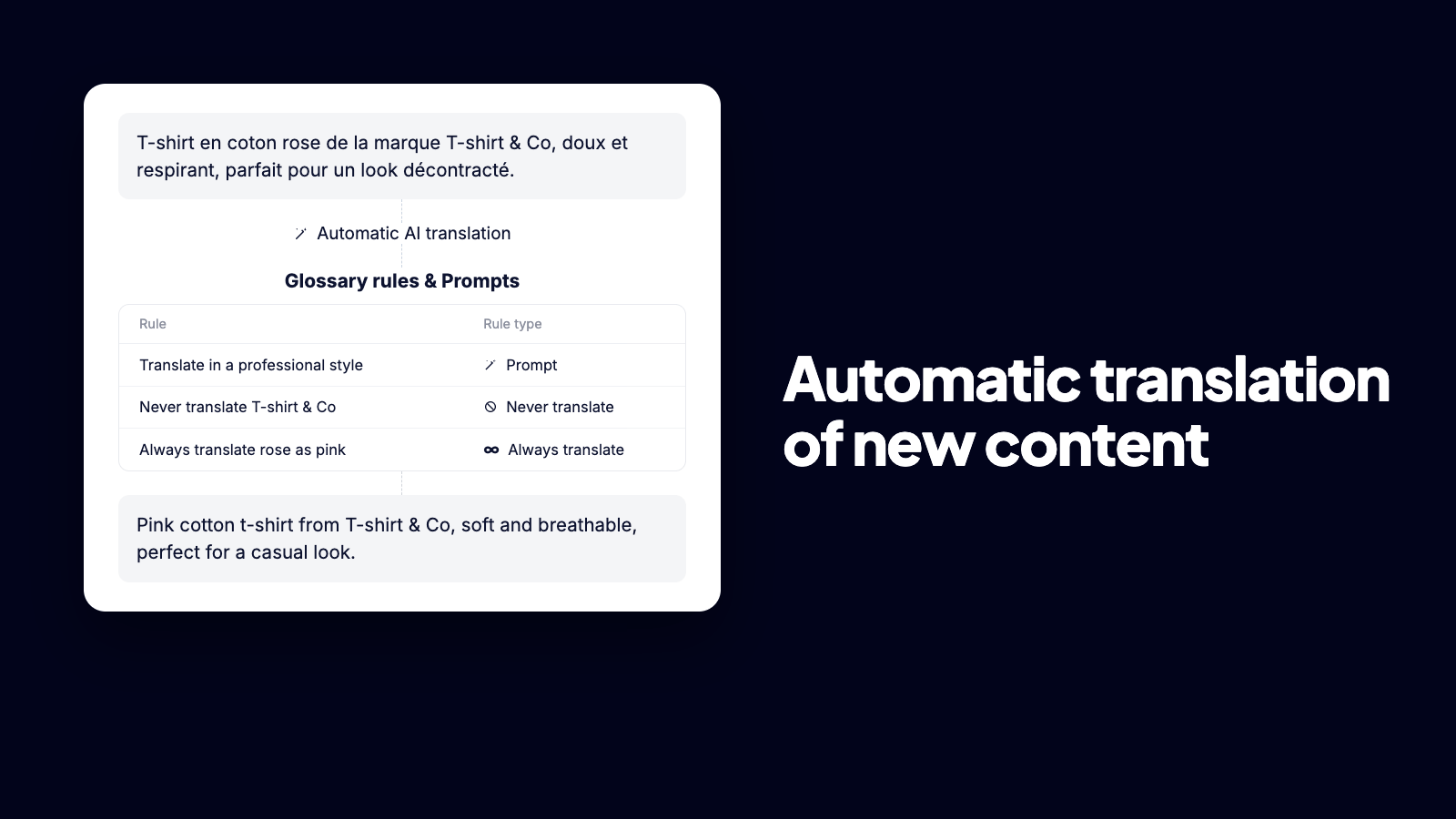
With Reversia, this work is built into the product: the smart glossary and brand prompts automatically apply your rules to every newly translated piece of content.
7. Launch, measure, iterate
Publish, track your KPIs market by market and adjust: deepen the localization of a priority market, open a new one, or switch formats depending on what the data tells you.
Key takeaways
Content localization is a measurable growth lever, as long as you treat it like an investment: prioritized markets, quantified goals, the right tooling.
- Translation isn't enough: adapt currencies, units, tone, visuals and examples
- 76% of shoppers prefer their native language, 40% never order in another one
- Validate each market with data before investing
- AI has flipped the cost equation: the effort now goes into adaptation, not translation
- A glossary and a style guide keep everything consistent over time
With the right tooling, a Shopify store goes from 1 to 5 languages in a few days. The rest is a matter of method - and you now have the roadmap.
Content localization FAQ
Quick answers to the most frequent questions about content localization.
What is the difference between translation and localization?
Translation conveys the meaning of a text in another language while keeping its structure. Localization goes further: it also adapts tone, images, currencies, units of measurement and examples to the cultural context of the target market.
Which content should you localize first?
Start with what directly impacts conversion: your best-sellers' product pages, the full checkout flow, mandatory legal pages and transactional emails. Then expand to your blog and marketing campaigns.
How much does localizing an online store cost?
It all depends on formats and the number of markets: text is cheap, video much less so. AI translation has sharply lowered the entry ticket - an app like Reversia localizes a full Shopify store in a few days, glossary and SEO included.
What is a concrete example of content localization?
A European fashion brand selling in Australia flips its seasonal highlights: the summer dress pushed in July in Paris gets pushed in December in Sydney. Same product, sometimes even the same language - but content designed for the local context.