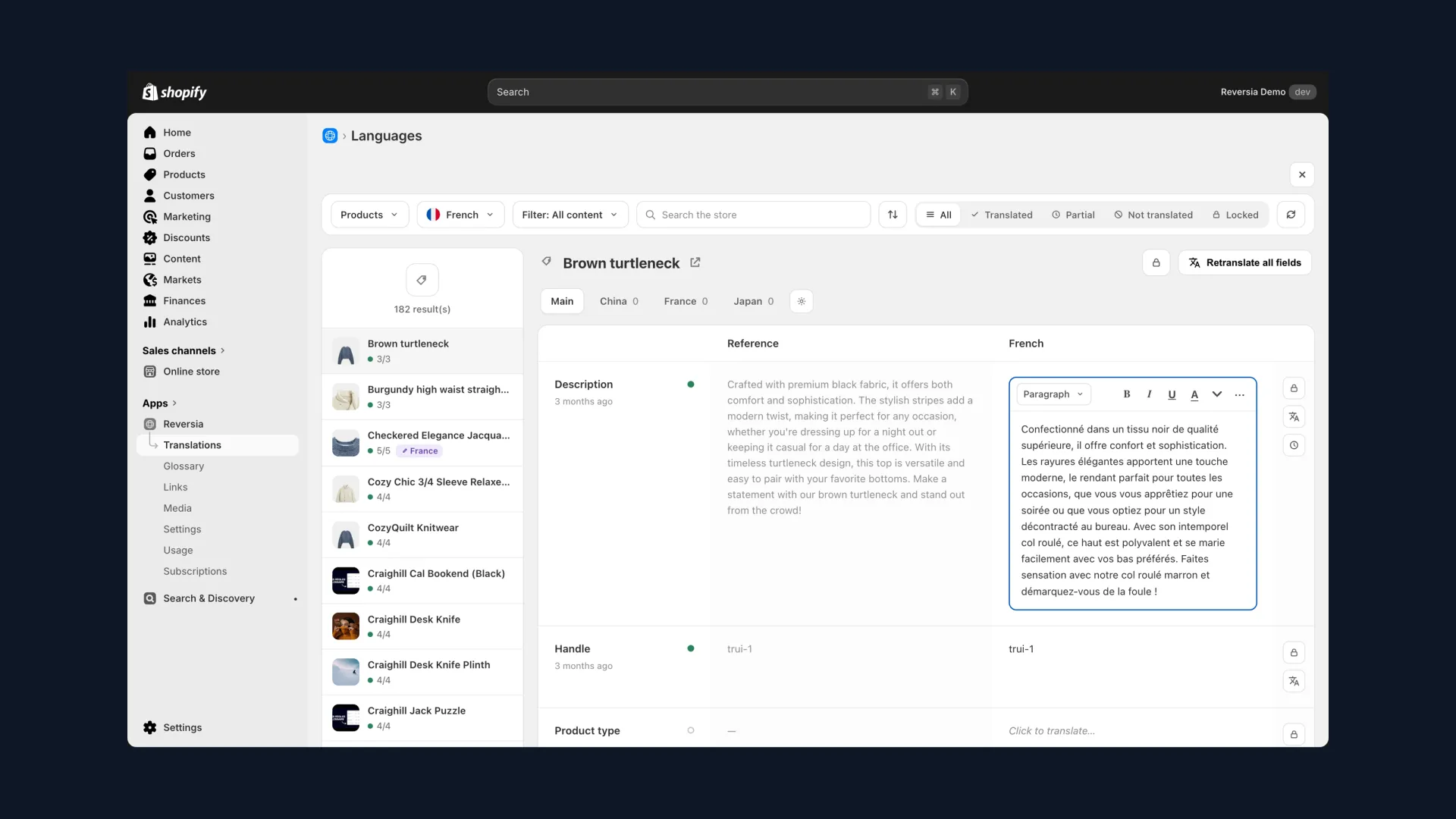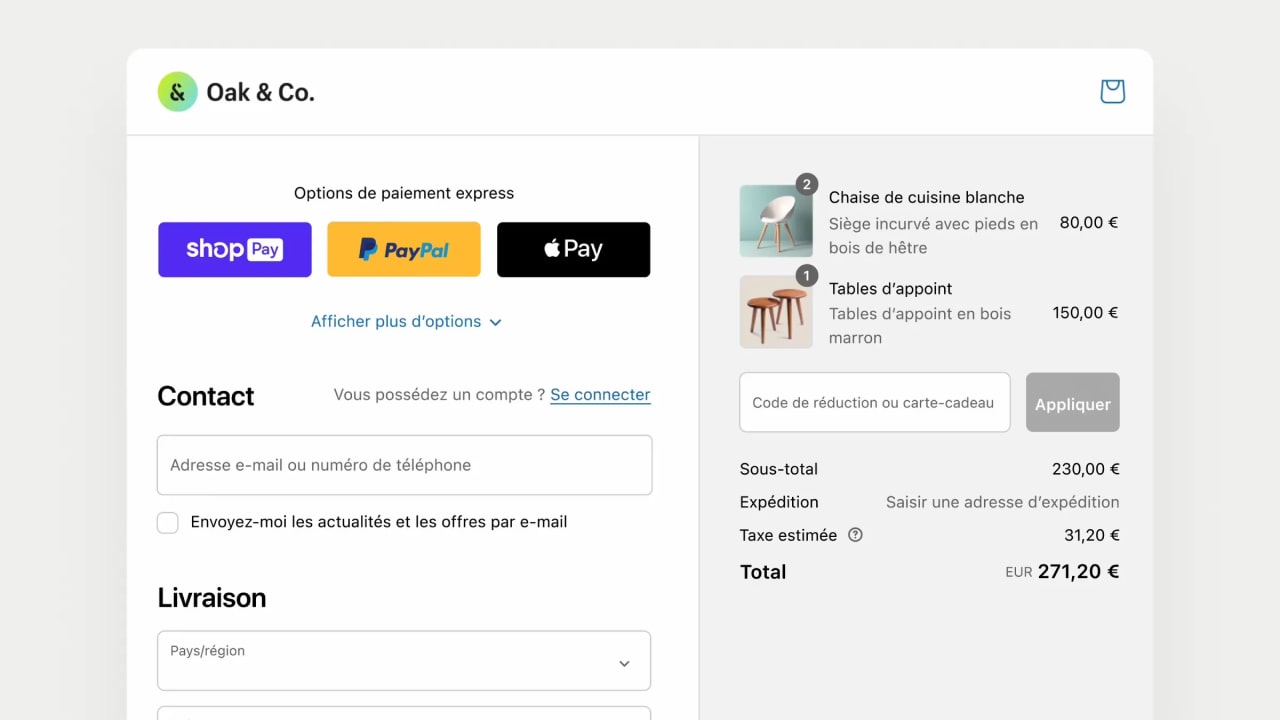
AI localization means using artificial intelligence to translate and adapt your store's content to the expectations of each market: language, tone, cultural references, SEO.
Before AI, localizing meant hiring translators or working with an agency, market by market. Today most of that work can be automated, and the stakes are real: according to data published by Shopify, a localized store can convert up to 40% better in its international markets.
What is AI localization?
Translating means moving a text into another language. Localizing means adapting the entire shopping experience to a market. AI now handles the heaviest part of that work:
- Translation of all store content: product pages, collections, pages, blog, navigation, checkout
- Adapting tone and cultural references to local expectations
- Terminology consistency across every language (product names, technical vocabulary)
- SEO metadata and image alt texts
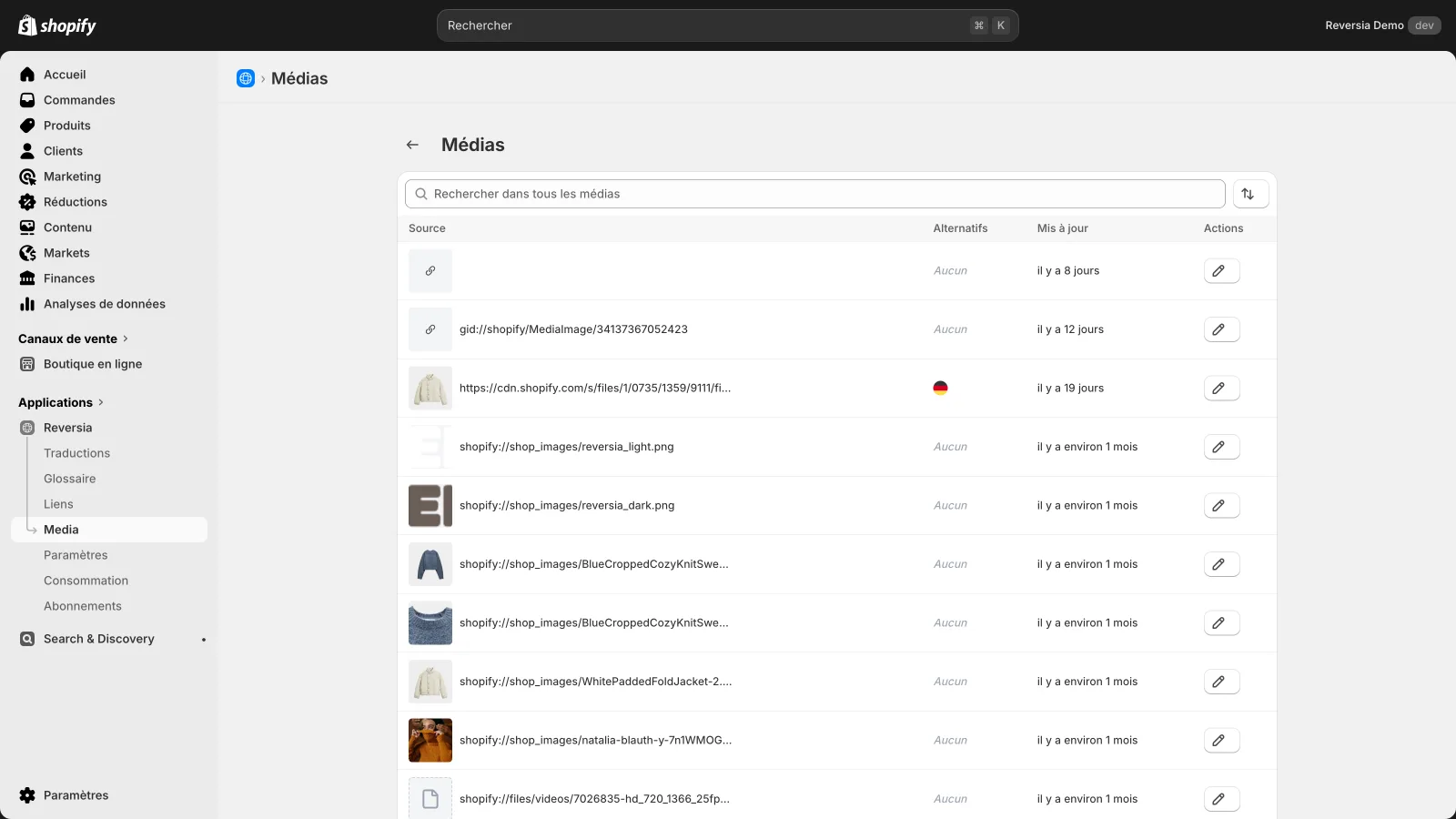
Localization also goes beyond text - the same product may deserve a different visual depending on the market. Modern tools let you attach distinct images to each language.
Two things remain outside AI's scope: currencies and payment methods, handled mechanically by your ecommerce platform, and strategic positioning per market, which remains a human decision.
How does AI translation work?
Machine translation has gone through three generations. Early statistical engines - like the one powering Google Translate at its 2006 launch - stitched together segment matches. Neural translation, which arrived in 2016, learned to analyze whole sentences. Today's language models go one step further.
| Generation | How it works | Limitation |
|---|---|---|
| Statistical translation | Segment matches drawn from bilingual corpora | Word-for-word, frequent mistranslations |
| Neural translation | Analyzes the full sentence | Ignores broader context, tone and brand |
| Language models (LLMs) | Context analysis: surrounding sentences, product category, brand guidelines | Quality depends on the configuration you provide |
Take the English word "light". For a jacket, it can mean lightweight or light-colored. A word-for-word engine picks at random; a language model decides from the context of the product page.
The same mechanism applies to your guidelines: formal or informal register per market, industry vocabulary, sentence length. That's what turns AI translation into genuine localization rather than mere linguistic conversion.
Setting up AI localization with Reversia
Reversia applies exactly this approach to your store: a native Shopify app that translates all your content with Anthropic's Claude AI, configured for your brand. Setup comes down to three steps.
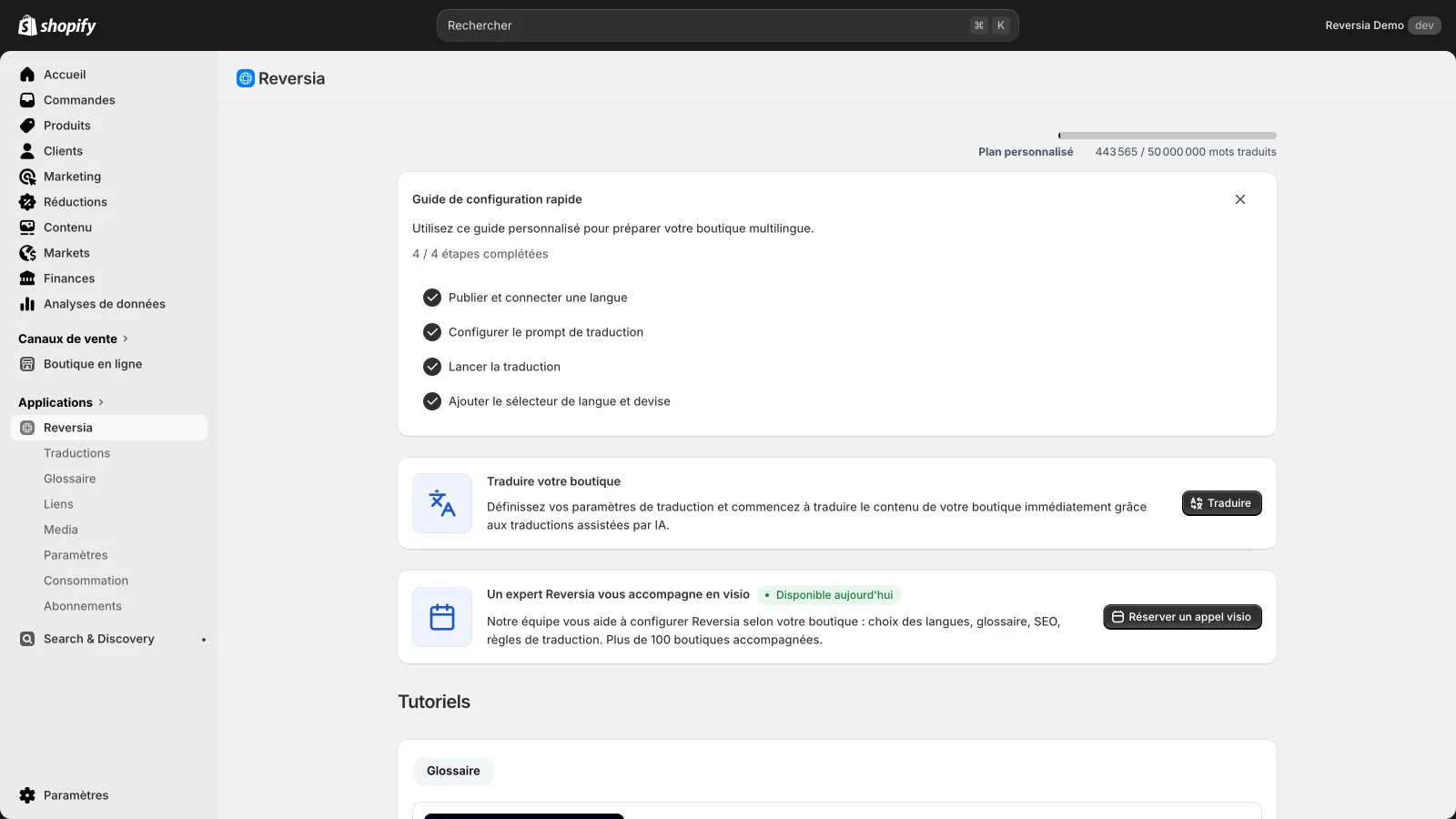
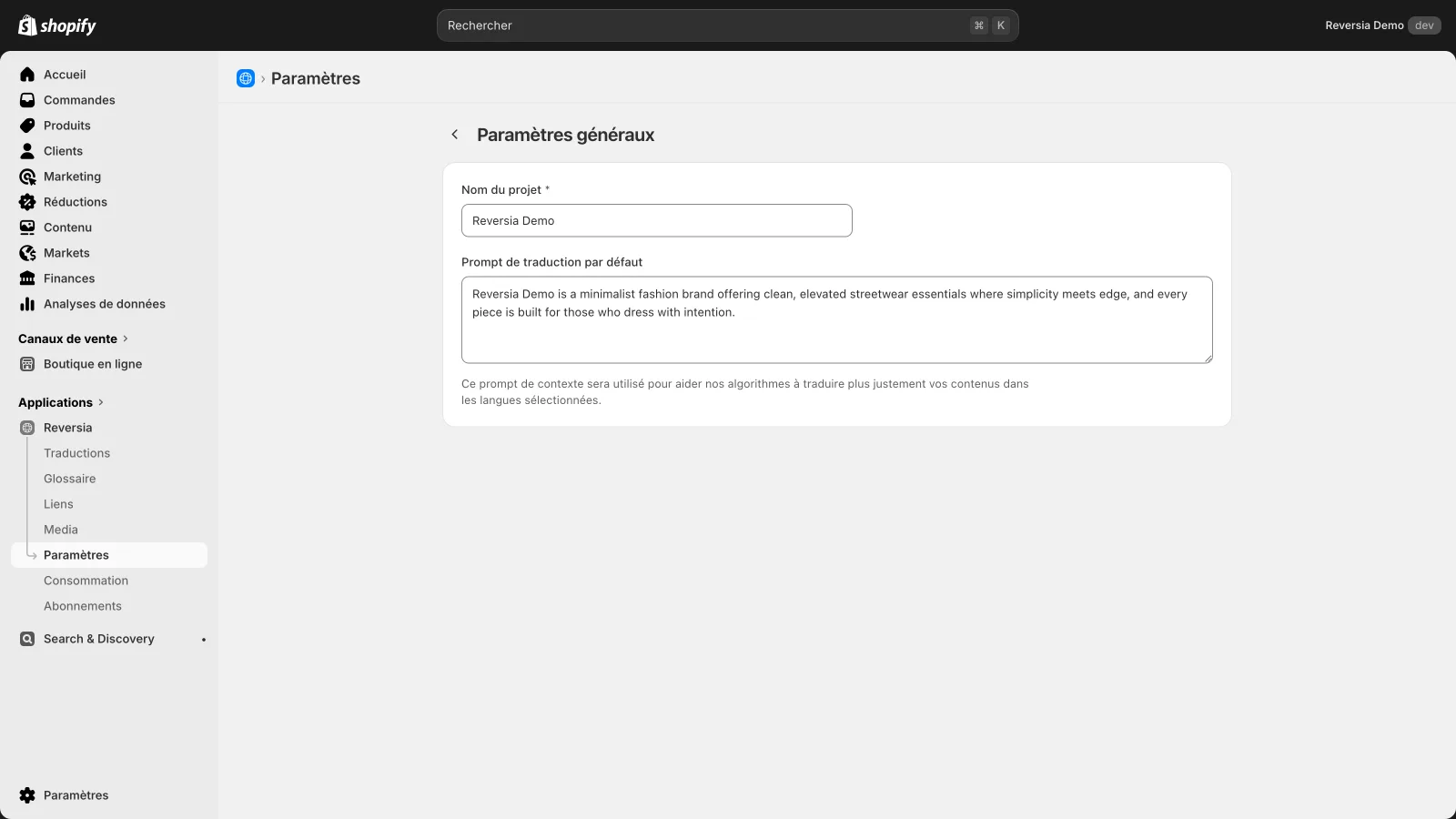
1. Configure your brand voice
The quality of AI translation depends on the frame you give the model. In Reversia's settings, you define a context prompt: who you are, who you sell to, the tone to adopt. These guidelines then apply to every language.
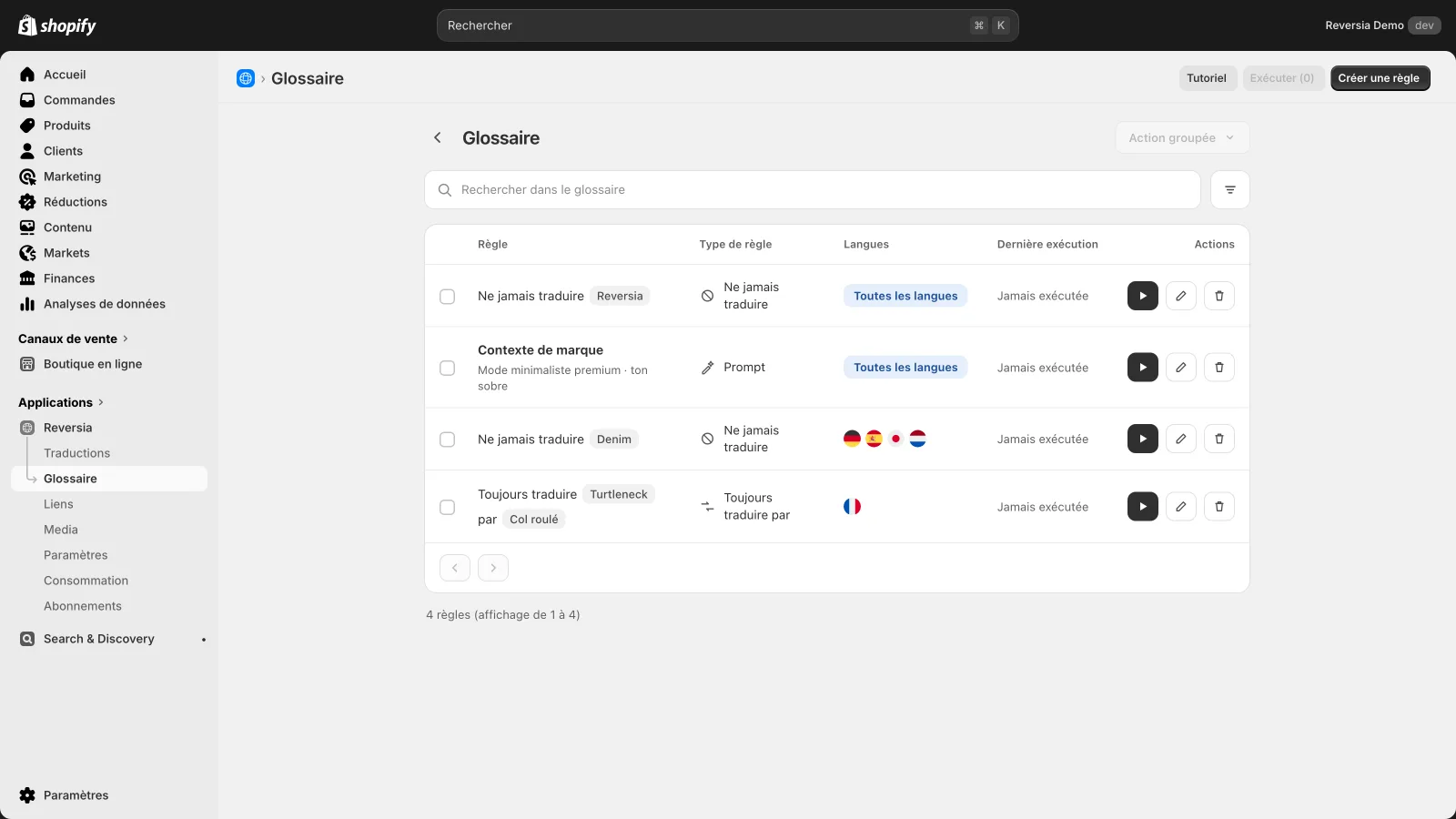
The glossary complements the prompt with hard rules: terms that must never be translated (your brand names), forced translations for key vocabulary, and language-specific prompts if a market calls for a particular tone.
2. Test on a sample, then scale
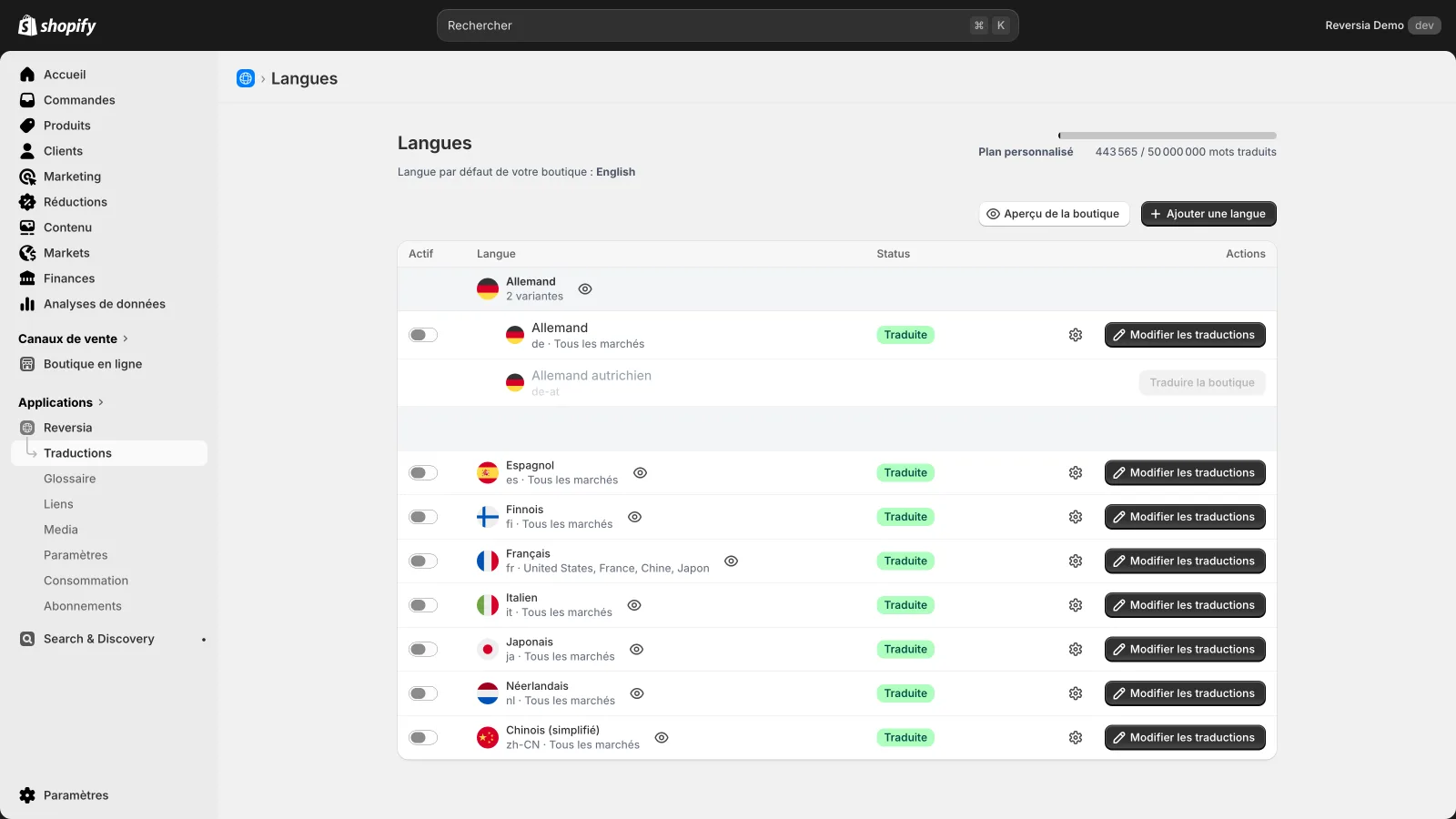
Before translating the whole catalog, run the translation on a varied sample: two or three product pages from different categories plus one marketing page. The goal is to surface what needs adjusting.
- Does the tone match your brand, in every language?
- Is product terminology respected?
- Are local formats (prices, units, dates) correct?
- Is SEO metadata properly translated?
Adjust the prompt or glossary if needed, then rerun. Once the configuration is dialed in, opening a new language takes minutes: Reversia translates the entire store, checkout and metafields included.
3. Keep a human in the loop
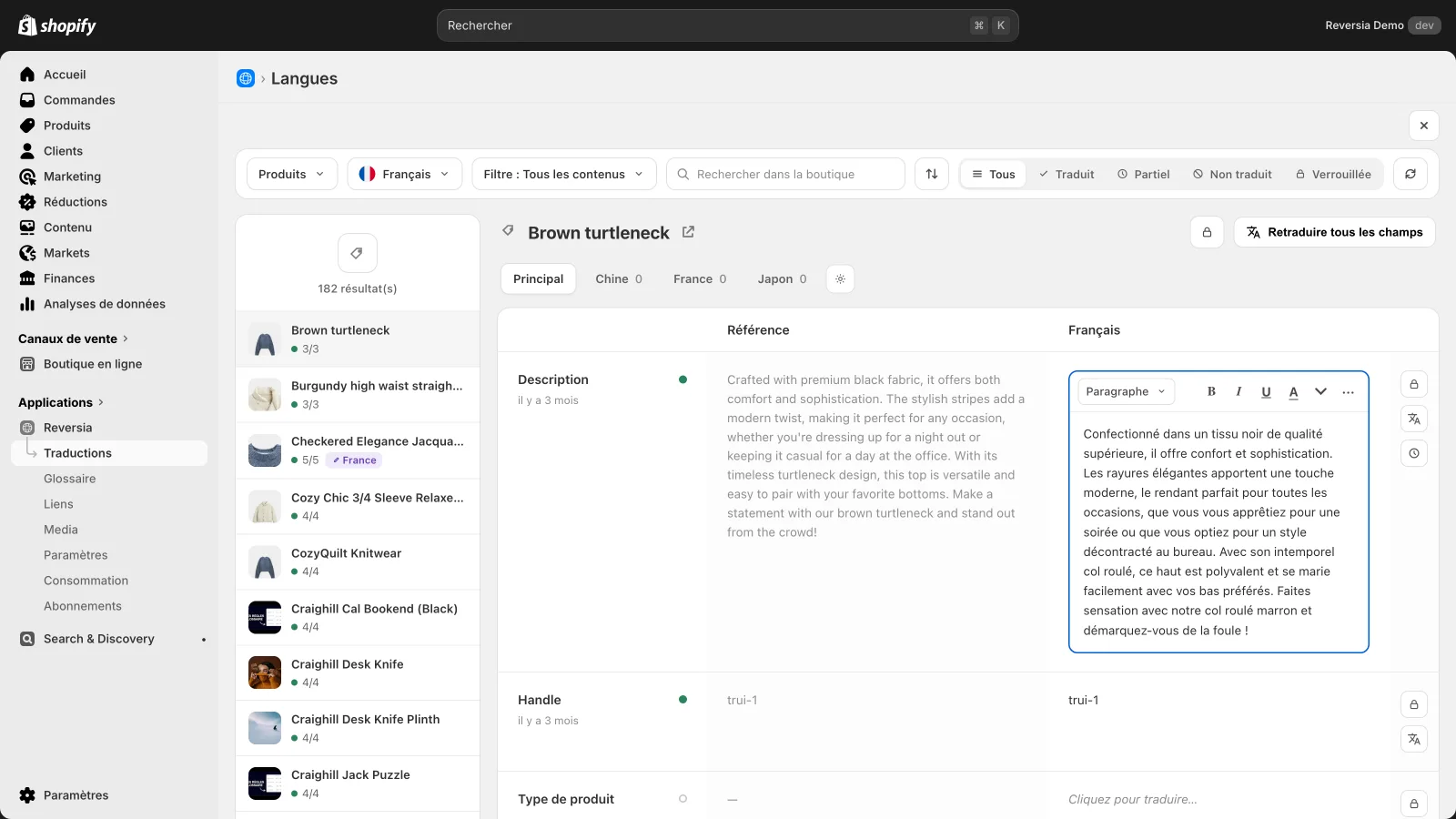
AI produces the first draft, a reviewer validates what matters. Focus human review where a mistake is costly, ideally with a native speaker who knows your brand. In Reversia, every translation remains editable by hand, field by field.
| Content type | Recommended approach |
|---|---|
| Product pages and collections | Automatic AI, spot checks |
| Navigation, menus, notifications | Automatic AI |
| Checkout, legal pages | AI + native-speaker review |
| Marketing campaigns and brand pages | AI + human adaptation |
The first few review rounds quickly teach you where AI excels on its own and where a human eye stays useful. Once that triage is done, localization becomes an ongoing process rather than a one-off project.
What Reversia automates for you
Reversia was built to cover a store's entire localization chain, with no file exports or back-and-forth between tools:
- Translation by Anthropic's Claude AI of all content, metafields and metaobjects included
- Brand prompts and smart glossary for a consistent tone in every language
- Automated multilingual SEO: URLs, hreflang tags, metadata, alt text
- Localized media: a per-language image variant when needed
- Translations stored in Shopify - you remain 100% owner
- Human support 7 days a week by email and phone
Plans start at $299 per month, and a new language launches in minutes from the Shopify admin.
AI localization FAQ
Will AI replace human translators?
No. AI lowers the barrier to entering new markets, but high-stakes content (checkout, legal pages, brand campaigns) still benefits from a native speaker's review. The human role shifts toward configuration, review and strategic choices.
What's the difference between translation and localization?
Translation moves a text into another language. Localization adapts the whole experience: tone, cultural references, price and date formats, SEO, visuals. Translation is one component of localization.
How long does it take to localize a store with AI?
With an app like Reversia, initial configuration (brand prompt, glossary) takes about an hour, and the full translation of a store into a new language then launches in minutes. Allow some review time for sensitive content.
Does AI localization improve SEO?
Yes, provided the tool handles the technical side: localized URLs, hreflang tags, translated metadata and alt text. Reversia does this automatically, so your pages get indexed and ranked in every language.